
Looking for a creamy protein cold foam recipe that actually pours over iced coffee instead of turning into a thick protein shake? This homemade vanilla version uses cold high-protein milk, a measured amount of whey powder, and an optional splash of vanilla. It takes about five minutes and makes a silky topper for cold brew, iced espresso, or an iced latte.
The key is to dissolve the protein powder before frothing. Too much powder makes a paste; too little milk leaves clumps. Below you’ll find a flexible base recipe, a realistic way to calculate protein from your own labels, three flavor variations, and solutions for flat or grainy foam.
Vanilla Protein Cold Foam Recipe
Prep time: 5 minutes | Yield: 1 generous coffee topping | Equipment: handheld milk frother, small whisk or shaker
Ingredients
- ½ cup (120 ml) very cold high-protein dairy milk, preferably 2% ultra-filtered milk
- 15 g vanilla whey protein powder (weigh it for precision; scoop sizes vary)
- ¼ teaspoon vanilla extract, optional
- 1–2 teaspoons cold milk or water, only if needed to thin
- Ice and cold brew or iced coffee, for serving
Instructions
- Refrigerate the milk until properly cold. Add the 15 g whey powder to a small cup and stir in a tablespoon or two of the milk to form a smooth paste. Whisk until no dry pockets remain.
- Gradually mix in the rest of the milk and vanilla extract. The mixture should be thinner than a milkshake. Add a teaspoon of cold water or milk if necessary.
- Pour into a tall, narrow container. Froth for 20–45 seconds, keeping the whisk just under the liquid surface until the mixture expands and forms fine bubbles. Adjust timing according to your frother and the protein powder.
- Fill a glass with ice and cold brew, then gently pour the foam on top. Serve immediately while the foam is freshest.
Texture tip: If your protein powder contains thickeners, use less powder or add more milk. The ideal foam is spoonable but still flows easily from the cup.
Why Make Protein Cold Foam at Home?
Cold foam gives iced coffee a delicate, creamy layer without needing an espresso machine. Adding whey and a protein-rich dairy base can increase the amount of protein in the topping, but homemade protein content varies by product. That is why this recipe uses an ingredient weight and shows you how to check the result.
Starbucks helped popularize protein cold foam, describing its US vanilla protein cold foam as a way to add roughly 15 g of protein to eligible drinks. Homemade foam is not an exact copy of the commercial product: ingredient formulas, portion sizes and textures can differ. Our goal is a convenient, customizable coffee topper rather than a branded dupe with unverified nutrition claims.
If you want the classic, non-protein version and three different frothing methods, see our how to make cold foam at home guide. This article focuses specifically on getting whey protein to foam smoothly.
Ingredients That Make a Difference
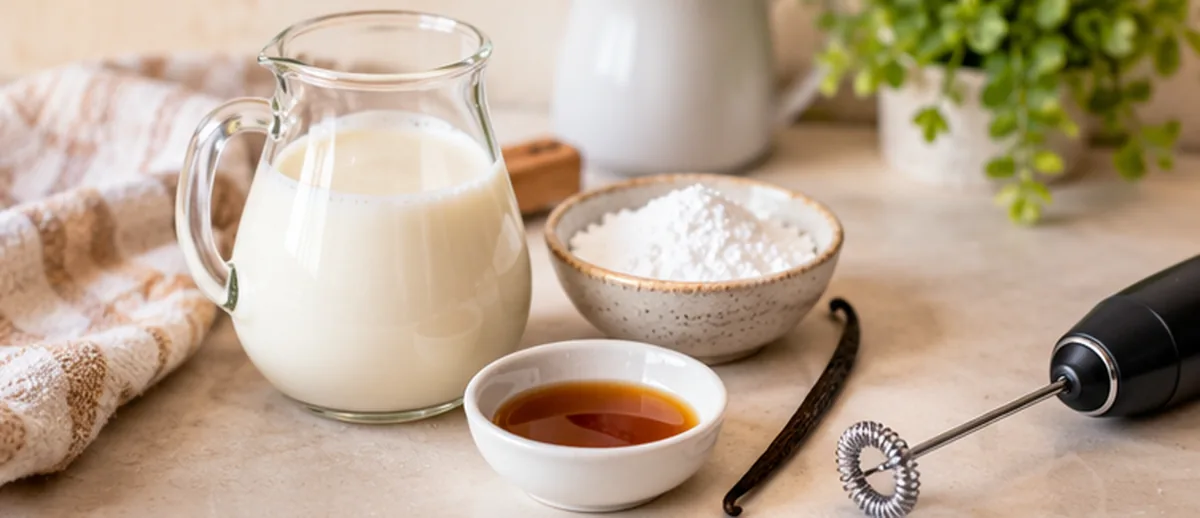
High-Protein Milk
A refrigerated, protein-enriched or ultra-filtered dairy milk offers an easy base for a protein-forward topping. Start with an unsweetened version if you want to control sweetness. Regular 2% milk also works, but it typically contains less protein per equal volume than milk marketed as ultra-filtered.
Vanilla Whey Protein Powder
Vanilla whey is a convenient option because it adds flavor without extra syrups. Powder formulas vary: some dissolve almost instantly, while others contain gums or fibers that make foam thick or slightly chalky. Weigh out 15 g instead of assuming one scoop equals 15 g. A full scoop may be too much for this small amount of milk.
Vanilla and Sweetener
Some protein powders are already very sweet. Taste the mixed liquid before adding syrup. A little vanilla extract may be enough. If you prefer a sweeter café-style drink, add ½–1 teaspoon vanilla syrup and stir well before frothing.
How Much Protein Does Homemade Cold Foam Have?
There is no one-size-fits-all protein number. Calculate it from the exact milk and powder you use. Here is an illustrative example, not a laboratory analysis or nutrition label for this recipe:
| Ingredient | Hypothetical label | Amount used | Protein contribution |
|---|---|---|---|
| Ultra-filtered milk | 13 g per 1 cup | ½ cup | 6.5 g |
| Whey protein powder | 24 g per 30 g powder | 15 g powder | 12 g |
| Total topping | Example only | 1 batch | 18.5 g |
The calculation is simple: protein listed per serving × the fraction of that serving used. Other milks and whey powders can change the result substantially. The iced coffee underneath may also contain protein if you add milk. Do not call the topping sugar-free simply because you omit added syrup: dairy milk contains naturally occurring lactose, and some powders contain added sweeteners or sugar.
How to Keep Protein Cold Foam Smooth and Fluffy

Step 1 — Make a slurry: Mixing the powder with a small amount of liquid first helps break up stubborn lumps. A mini whisk works well, and you can use a blender bottle for a bigger batch.
Step 2 — Thin to the right consistency: Protein powders absorb liquid at different rates. You want a smooth pour, not a pudding. Add small splashes of cold milk when necessary.
Step 3 — Aerate gently: Dip the frother below the surface before turning it on to prevent splashes. Move it slightly up and down as fine bubbles form. Stop when the mixture becomes airy. Overworking certain powders can make an unpleasantly thick texture.
Step 4 — Add foam to a chilled drink: Ice and properly cold coffee help the foam stay distinct for longer. Serve immediately rather than allowing the foam to sit on the counter.
Can You Make Protein Cold Foam Without a Frother?
Yes, although results are more variable than regular milk foam. After dissolving the whey powder thoroughly, transfer the mixture to a lidded jar with plenty of headspace. Shake vigorously for 45–60 seconds. It may make a more bubbly, less velvety layer, but it’s practical and requires no special tool.
You can also use a French press by plunging the chilled mixture rapidly until foamy. If the blend is unusually thick, dilute it first. Unlike plain milk, protein-enriched mixtures are prone to clumping, so always pre-mix before shaking or plunging.
Banana coffee variation: Add 1–2 teaspoons of our homemade banana syrup for coffee to your iced coffee, then top with vanilla protein cold foam. The syrup adds banana flavor; the milk and protein powder supply protein.
Three Protein Cold Foam Flavor Variations

1. Vanilla Bean
Use vanilla whey protein and a few drops of vanilla extract. A small pinch of cinnamon on top adds aroma without overwhelming the coffee. Start with no extra syrup and sweeten only after tasting.
2. Chocolate Protein Cold Foam
Substitute chocolate whey protein for vanilla. Whisk a pinch of cocoa powder into the powder slurry if you want a deeper cocoa flavor, but do not add too much: cocoa absorbs moisture and can weigh down the foam. Pair with plain cold brew.
3. Salted Caramel Protein Cold Foam
Choose unflavored or vanilla whey, add ½–1 teaspoon caramel syrup, and finish with a tiny pinch of salt. This version tastes especially good on strong iced espresso. If your powder is already sweetened, start with half the syrup.
Protein Cold Foam Troubleshooting
- Grainy foam: Dissolve the whey fully before aerating. Try a different powder if the graininess persists.
- Too thick: Add more cold milk a teaspoon at a time; avoid adding a full scoop of protein to a tiny portion of milk.
- Flat foam: Make sure the milk is properly chilled, use a narrow cup and try a milk that froths more easily.
- Foam disappears quickly: Serve immediately over iced coffee. Different protein powders stabilize bubbles differently.
- Too sweet: Choose unflavored protein powder or remove the syrup.
- Too watery: Froth a little longer or use a different milk, but don’t add large amounts of powder at once.
Serving, Make-Ahead Tips, and Storage
This topping is excellent on iced coffee, chilled decaf, cold brew, or an iced matcha latte. For a savory matcha option, see our bone broth matcha latte. For a protein-focused breakfast drink, pair it with our high-protein banana bread latte or browse high-protein morning drinks.
For the best texture, froth right before serving. If you need to prep ahead, combine and refrigerate the unfrothed ingredients in a covered food-safe container, then shake or stir and froth when ready. Keep dairy refrigerated at 40°F (4°C) or below. Perishable food should not sit at room temperature for more than two hours (one hour when the temperature is above 90°F/32°C).
Frequently Asked Questions
1. Can you put whey protein powder in cold foam?
Yes. Dissolve a small weighed amount into cold milk before frothing. Some powders foam more reliably than others, so adjust the consistency rather than adding a large scoop immediately.
2. Which protein powder is best for protein cold foam?
A smooth, readily dissolving whey powder is a practical starting point. Vanilla and unflavored varieties are versatile, but there is no guarantee that every brand will create the same texture.
3. Can I use a ready-to-drink protein shake instead of milk and powder?
You can try it. Some ready-to-drink shakes froth well, while others are too thick or contain stabilizers that affect bubbles. Chill it thoroughly and test a small serving first.
4. How do I make high-protein cold foam without heavy cream?
The base recipe already skips heavy cream: it uses high-protein milk and whey powder. Heavy cream creates richness but is not necessary for a light protein topping.
5. Is protein cold foam the same as a protein shake?
No. Cold foam is aerated to make a relatively light, pourable topping. A protein shake is typically a larger drink with a thicker, blended consistency.
6. Can this recipe be dairy-free?
For a dairy-free alternative, use a chilled plant milk that froths well and a compatible plant protein powder. Expect to experiment with thickness and check the nutrition labels; the texture will be different.
7. How much protein is in a serving?
It depends on your milk and powder. Use the serving information printed on both labels to add up the grams. The 18.5 g example above describes only the hypothetical labels shown in the table.
8. Can I make protein cold foam ahead of time?
Pre-mix and refrigerate the liquid portion if needed, but froth shortly before drinking. Aerated foam loses volume during storage.
Bottom Line
For a reliable homemade protein cold foam recipe, combine very cold high-protein milk with a modest, precisely weighed portion of whey, dissolve the powder completely, then froth until soft and pourable. Adjust the consistency to your powder, use your own labels to calculate nutrition, and enjoy it fresh over iced coffee. Keep the classic cold foam guide for general techniques; use this protein-specific method when the texture and protein calculation matter most.
Nutrition note: Exact calories, sugar and protein depend on the products selected. This is a coffee topping, not a nutritionally complete meal. Milk and whey are dairy ingredients and are unsuitable for anyone with a milk allergy.
Sources: Starbucks Protein Power Hour (2026); USDA Food Safety Basics.
2 thoughts on “Protein Cold Foam Recipe: Easy 5-Minute Vanilla Coffee Topping”