
If you are trying to lose weight, is water always better than a diet drink? The answer is more nuanced than the usual “water good, diet soda bad” headline. Water is still the best default beverage for most people, but current randomized research suggests that low- or no-calorie sweetened beverages can also fit into a weight-loss plan—especially when they replace sugar-sweetened drinks.
The key question in the diet beverages vs water for weight loss debate is not whether a zero-calorie drink magically burns fat. It does not. The real issue is what that beverage replaces, how much energy it removes from your day, and whether the choice helps you stick with your overall eating plan.
Quick answer: choose water most often. If you regularly drink sugary soda, sweet tea, lemonade, or other calorie-containing drinks, replacing them with either water or a zero-calorie beverage can reduce beverage calories. A diet drink may be a useful bridge if going straight to plain water makes the change harder to maintain.
Diet Beverages vs Water for Weight Loss: What Actually Matters?
Weight loss depends on maintaining an energy deficit over time. Drinks can matter because calories from beverages are easy to consume quickly and may not be as filling as calories from solid food.
That means replacing a regular soda with a calorie-free option can make a meaningful difference. Replacing water with diet soda, however, does not create the same calorie savings because water already contains no calories.

What the Latest Research Says
The newest long-term evidence adds an important twist. A 2026 randomized trial followed adults with overweight or obesity for two years. Participants were assigned to either water or non-nutritive sweetened beverages during a structured weight-management program. After 104 weeks, both groups had maintained weight loss, and the difference between the groups was not statistically significant. In other words, both water and zero-calorie sweetened beverages were compatible with long-term weight management in that program. View the study on PubMed.
The same research program reported at 52 weeks that the non-nutritive sweetened beverage group maintained slightly more weight loss than the water group—about 7.5 kg versus 6.1 kg. The researchers noted that the difference was statistically significant but not clinically large. See the 52-week randomized trial.
Other randomized studies have gone the opposite direction. A 24-week trial in women who regularly consumed diet beverages found somewhat greater weight loss when those beverages were replaced with water. See the water-replacement trial.
Put together, these studies suggest there is no universal winner for every person. Your total diet, habits, preferences, and what the beverage is replacing matter more than a simple “diet drink versus water” label.
The Biggest Benefit Comes From Replacing Sugary Drinks
If you currently drink regular soda, sweetened iced tea, energy drinks, or sugar-heavy coffee drinks, switching to a zero-calorie beverage can remove a meaningful amount of energy from your day.
For example, a typical sugar-sweetened soda can contain roughly 140 calories and about 35 grams of sugar per 12-ounce serving, although exact values vary. One or two servings a day can add hundreds of calories without making you feel especially full.
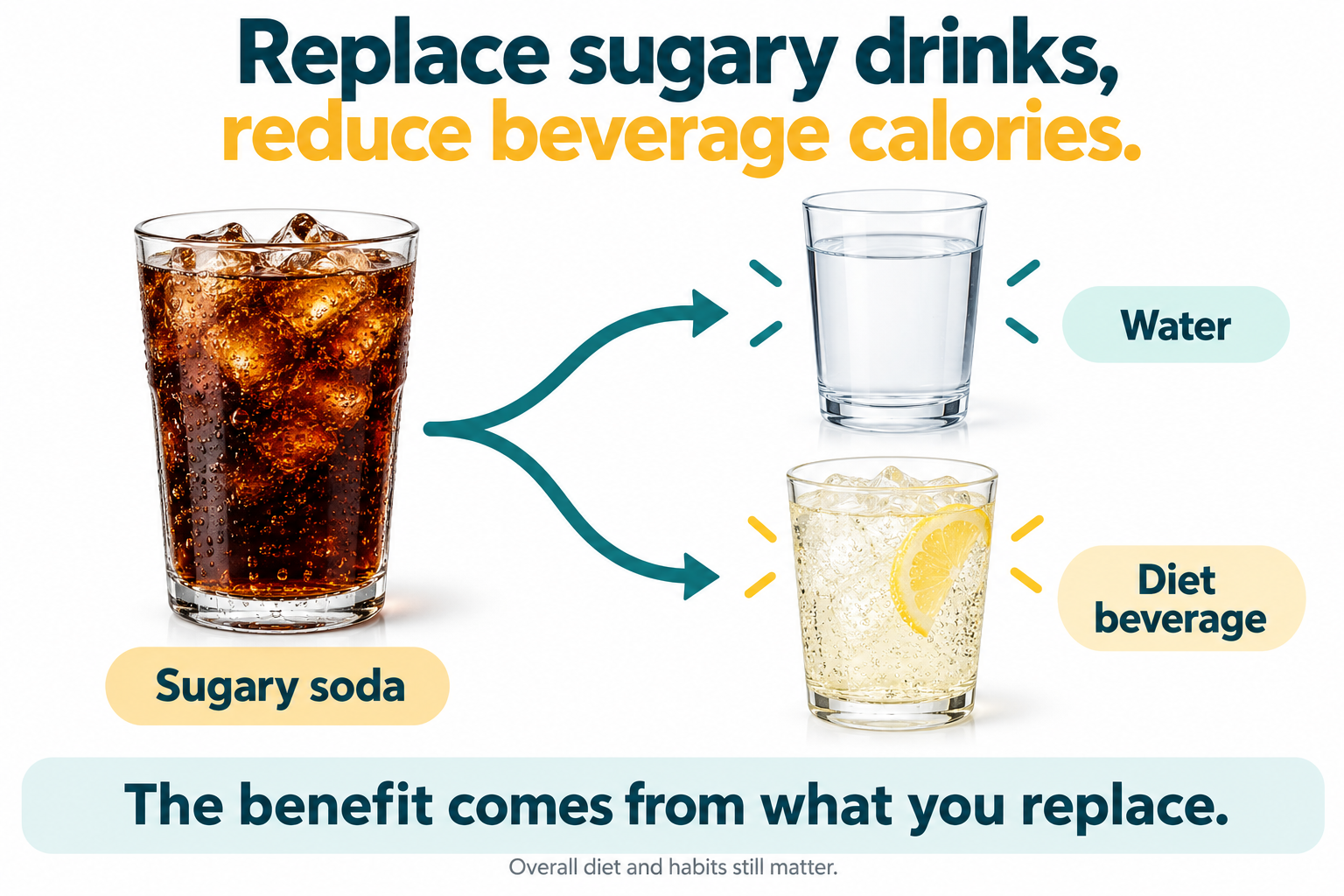
This is why the American Heart Association encourages water as the best default while also noting that diet drinks can be a better choice than sugary drinks for people trying to reduce added sugar or lose weight. American Heart Association guidance.
Why Water Is Still the Best Default
Even though diet beverages can be useful, water remains hard to beat for everyday hydration. It has no calories, no sugar, no sweeteners, and no need for a nutrition label.
Water is especially useful if you already enjoy it and do not need sweetness to stay consistent. Plain water, mineral water, and unsweetened sparkling water can all help you stay hydrated without adding calories.
If plain water feels boring, try simple flavor additions such as lemon, lime, cucumber, mint, or ginger. Our ginger water recipe is an easy place to start.
What About Artificial and Non-Sugar Sweeteners?
This is where the topic becomes more complicated. In 2023, the World Health Organization issued a conditional recommendation against using non-sugar sweeteners specifically as a long-term strategy for weight control. The WHO concluded that the available evidence did not show a clear long-term benefit for reducing body fat and emphasized reducing overall dietary sweetness. Read the WHO guideline.
That does not mean an occasional diet soda has been proven harmful, and it does not erase randomized trials showing that replacing sugary beverages with low-calorie alternatives can reduce energy intake. It means non-sugar sweeteners should not be treated as a stand-alone weight-loss solution.
A practical approach is to use them as a tool when useful—not as the foundation of your diet.
Does Drinking More Water Automatically Cause Weight Loss?
No. Water does not directly burn body fat. It can support weight management when it replaces caloric drinks, helps you stay hydrated, or makes it easier to structure meals and snacks, but simply adding extra water to an unchanged diet does not guarantee weight loss. For evening options, see our guide to night drinks for weight loss.
The most useful question is: what is the water replacing?
If it replaces a 150-calorie drink every day, the impact can add up. If it simply gets added alongside the same beverages and foods you already consume, the calorie difference may be zero.
Better Low-Calorie Beverage Options
If you want variety without turning every drink into a source of extra calories, you have several options. Unsweetened tea, black coffee, sparkling water, infused water, and low-calorie beverages can all fit depending on your preferences.

For more ideas, try our cold brew hibiscus tea or black coffee with ginger. Just remember that sugar, syrups, creamers, and other additions can quickly change the calorie count.
So, Which Is Better for Weight Loss?
For most people, the most practical ranking looks like this:
- Water: best default for hydration and the simplest zero-calorie choice.
- Unsweetened tea, coffee, or sparkling water: useful for variety with few or no calories before additions.
- Diet or zero-calorie beverages: potentially useful when they replace sugary drinks or help you stick to a lower-calorie pattern.
- Sugar-sweetened drinks: the easiest category to reduce when weight loss is the goal.
If you love water, keep drinking it. If you currently consume regular soda and find that switching directly to water is difficult, a diet beverage may be a reasonable transitional option. The evidence does not support the idea that you must completely avoid zero-calorie beverages in order to lose weight.
Diet Beverages vs Water for Weight Loss: The Bottom Line
When comparing diet beverages vs water for weight loss, water remains the best everyday default—but diet beverages are not automatically an obstacle to progress.
The strongest practical benefit comes from replacing a calorie-containing sugary drink. Both water and a low- or no-calorie beverage can accomplish that. Long-term randomized research now suggests that people can lose weight and maintain it while using either approach within a structured weight-management program.
So the smartest choice is the one that reduces unnecessary beverage calories, supports hydration, and helps you follow a healthy eating pattern consistently.
This article is for general nutrition education and is not a substitute for individualized medical advice. If you have diabetes, kidney disease, or another condition that affects fluid or dietary needs, discuss major dietary changes with your healthcare professional.
Frequently Asked Questions
Are diet beverages better than water for weight loss?
Not necessarily. Water is the best default beverage for most people. Randomized trials show that diet beverages can also fit into weight-loss programs, particularly when they replace sugary drinks.
Can diet soda make you gain weight?
Diet soda does not automatically cause weight gain. Body-weight change depends on overall energy intake and many lifestyle factors. Observational studies can also be influenced by the fact that people already concerned about weight may be more likely to choose diet beverages.
Is replacing regular soda with diet soda helpful?
It can be. If the diet drink contains little or no energy, swapping it for a sugar-sweetened soda can substantially reduce beverage calories.
Is replacing soda with water even better?
Water is the simplest long-term choice because it contains no calories, sugar, or sweeteners. But if a diet drink makes it easier for you to stop drinking sugary soda, it can still be a useful strategy.
Does drinking water before meals help with weight loss?
Some people find that water before meals helps with fullness or routine, but it is not a fat-burning shortcut. Overall calorie intake and eating patterns remain more important.
Does the WHO recommend artificial sweeteners for weight loss?
No. The WHO issued a conditional recommendation against using non-sugar sweeteners as a long-term method for controlling body weight.
What is the healthiest drink for weight loss?
Plain water is an excellent first choice. Unsweetened sparkling water, tea, and coffee can also provide variety without many calories.
Can I drink diet soda every day and still lose weight?
Weight loss can still occur if your overall diet creates an energy deficit. However, diet soda should not be viewed as a weight-loss treatment by itself, and water should remain a major part of your hydration routine.
3 thoughts on “Diet Beverages vs Water for Weight Loss: Which Is Actually Better?”