Protein soda is a fizzy drink with added protein, usually made with specialized clear whey. It has a lighter, more refreshing texture than a creamy protein shake, but the word “protein” does not automatically make a soda healthy. The best choice depends on the actual protein source, caffeine, sugar, calories and your overall diet.
In this guide, you will learn how sparkling protein drinks work, compare documented US products, and make a simple homemade raspberry-lemon protein soda without a fizzy shaker accident. For a still version, see our protein water guide.
What Is Protein Soda?
Quick answer: Protein soda is a carbonated drink with added protein, often clear whey isolate. Unlike a creamy shake, it tastes and feels closer to sparkling flavored water. Check the can for protein grams, calories, sugar, caffeine and milk allergens; the category itself does not guarantee a healthier drink.
Protein soda combines carbonated water, flavorings and a protein ingredient into a drink that resembles soda rather than a thick shake. Commercial manufacturers formulate their beverages to keep the protein dispersed despite carbonation and acidity. You cannot always recreate that stability by stirring ordinary whey powder into a fizzy drink.
Is Protein Soda Actually Healthy?
A sparkling protein drink may help you meet protein needs if you have difficulty getting enough from meals. Whey protein is complete, supplying all nine essential amino acids. However, some drinks add substantial caffeine, sweeteners or acids, and a can rarely provides the fiber and range of nutrients found in a balanced meal. Read the nutrition panel and allergen statement, especially if you have a milk-protein allergy.
Protein soda is not inherently better than regular water. For hydration alone, water remains a great choice. For more context, read our diet beverages vs water for weight loss comparison. Protein soda may be useful as a convenient supplement, not a meal replacement or a shortcut to muscle gain.
Protein Soda Brands: Examples in the USA
As of October 2026, several brands market distinctive sparkling protein beverages. Manufacturer information may change, and flavors or can sizes can vary, so verify the exact label before buying.
| Product | Protein | Calories | Key detail |
|---|---|---|---|
| Premier Protein Sparkling Protein Soda | 15 g | 90 | 3 g sugar; check flavor label |
| Bucked Up Carbonated Protein Soda | 25 g | 100 | Zero sugar; caffeine-free |
| Barebells Protein Soda (selected product) | 10 g | Check can | Contains caffeine; check label for amount |
Sources: Premier Protein product announcement, Bucked Up product details and individual product labels. This is an informational comparison, not a taste test or sponsored ranking.
How to choose among brands
Prioritize protein per serving, a protein source suited to your dietary needs, an acceptable sugar level, caffeine tolerance, taste and cost per gram of protein. Distinguish whey from collagen: collagen is not a complete protein and cannot be assumed equivalent to whey for muscle recovery.
How to Make Protein Soda at Home (Raspberry-Lemon Recipe)
At-home method: Dissolve a serving of clear whey isolate in cold still water, wait for the foam to settle, then slowly add chilled sparkling water in an open glass. Never shake carbonated water in a sealed shaker. Follow your powder’s directions, since not every protein powder mixes well with carbonation.
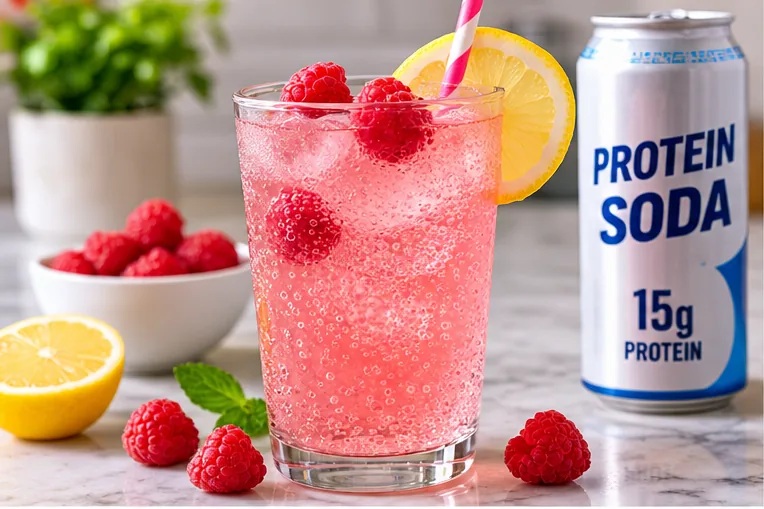
Raspberry-Lemon Protein Soda
Ingredients
Method
- Mix clear whey with cold still water as directed by the manufacturer.
- Allow foam to settle for several minutes.
- Fill a tall open glass partly with ice and add protein mixture.
- Slowly pour in the chilled sparkling water along the side of the glass. Never shake carbonated water in a sealed shaker.
- Add optional lemon and raspberries, gently stir if necessary, and serve immediately.
Notes
The easiest home method is to mix clear whey in still water first, let foam settle, and gently finish with chilled sparkling water. Do not shake carbonated water in a sealed protein shaker: pressure may build and cause spills.
Ingredients (1 serving)
- One serving lemon- or berry-flavored clear whey isolate, according to the manufacturer’s label
- 1/2 cup (120 mL) cold still water, or the minimum amount recommended to dissolve the powder
- 3/4–1 cup (180–240 mL) cold plain sparkling water
- 1–2 teaspoons fresh lemon juice, optional
- 2–3 fresh raspberries, optional
- Ice, as desired

Instructions
- Prepare the base. Mix the clear whey isolate with cold still water according to the package instructions in an open container or shaker.
- Let the foam settle. Wait several minutes until the protein base becomes clearer and less foamy.
- Add ice. Fill a tall serving glass partly with ice. Pour in the prepared protein base.
- Add the bubbles. Slowly pour in chilled sparkling water along the side of the glass; stir gently once, if needed.
- Finish. Add a little lemon juice and fresh raspberries if you enjoy a tart fruit flavor, and serve immediately.
Important: Different protein powders react differently to acid and carbonation. Test a small amount first and adjust ratios to the powder instructions. An opaque shake-style whey may clump or foam heavily.
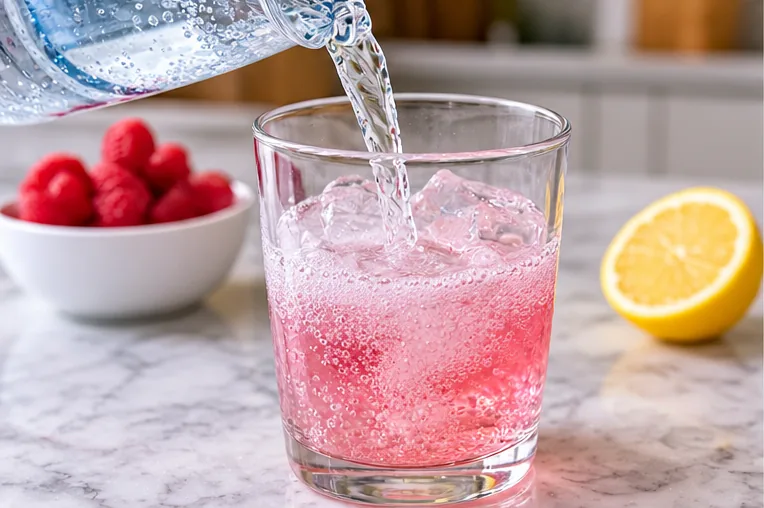
How to Avoid Too Much Foam
Keep all ingredients cold. Mix powder separately in uncarbonated water, allow the initial foam to settle, then add bubbles gradually to an open glass. Never seal and shake carbonated liquid. Strongly carbonated water, extra citrus and certain powders can all increase foaming; reduce the sparkling-water ratio if needed.
Protein Soda vs Protein Water vs Protein Shakes: Which to Choose?
| Drink | Texture | Best reason to choose it |
|---|---|---|
| Protein soda | Fizzy, usually clear | You prefer a sparkling beverage |
| Protein water | Still, clear or slightly cloudy | You prefer a lighter non-carbonated drink |
| Protein shake | Thick, creamy | You want a shake, sometimes with additional nutrients |
| Plain water | Still or sparkling | You primarily need hydration |
The total daily protein you consume matters more than whether the drink is fizzy. Pair protein intake with regular resistance training if muscle development is your goal.
Does Protein Soda Help With Weight Loss?
No soda causes body fat to disappear. An option with protein and relatively few calories might replace a higher-calorie drink, or help some people feel satisfied, but drinking it in addition to everything you already consume adds calories. A sustainable eating pattern is more important than claims about a special ingredient.
Can Protein Soda Replace a Meal?
Usually not. A single can may provide substantial protein yet little fiber and few other nutrients. Whole foods—including beans, dairy, eggs, fish, meat and tofu, depending on preferences—offer a broader nutritional mix. If you rely on supplements for a medical or athletic plan, seek individualized guidance.
Potential Drawbacks and Safety Considerations
Milk allergens: Whey is milk-derived even when the drink is transparent. Caffeine: Some protein sodas double as energy drinks, so check milligrams per can. Digestive comfort: Carbonation and some sweeteners can trigger bloating or discomfort. Dental considerations: Frequently sipping acidic drinks may contribute to enamel erosion. Anyone with kidney disease or a prescribed protein restriction should review supplemental protein with their clinician.

Frequently Asked Questions About Protein Soda
Does protein soda really contain protein?
Yes, products labeled as protein sodas typically add whey or another protein source. Check grams per can and the ingredients list.
Is protein soda the same as an energy drink?
No. Some protein sodas have no caffeine, while others contain caffeine. The category name alone does not tell you.
Can I put protein powder in soda?
Some clear whey products can be mixed into a still-water base then topped with sparkling water. Ordinary whey powder may clump or foam excessively. Do not shake soda in a sealed bottle.
Is protein soda good after a workout?
It can supply protein if it uses an appropriate protein source. Overall daily protein and your training program matter more than a specific soda.
Does carbonation damage the protein?
Carbonation does not simply erase the amino acids in a protein drink. Formulation and storage stability are more relevant concerns.
Is protein soda sugar-free?
Some products are, but others contain added sugar. Compare the labels for the exact flavor and can size.
Is protein soda vegan?
Many products contain whey from milk and are not vegan. Look for an explicitly plant-based formula if necessary.
Does protein soda help build muscle?
It can contribute dietary protein alongside resistance training and adequate total nutrition. It is not a muscle-building treatment on its own.
Can protein soda replace regular water?
It supplies fluid but is not necessary for basic hydration. Plain water is usually the simplest default.
How much protein is in homemade protein soda?
That depends entirely on the measured serving of your chosen powder. Do not assume a universal amount from this recipe.
The Bottom Line
Protein soda is a refreshing way to consume protein if you like bubbles more than creamy shakes. Pick a product based on its actual nutrition facts, caffeine and allergens—not its marketing. A homemade lemon-berry version can work when clear whey is mixed separately and sparkling water is poured in slowly.
Explore more drink ideas in our protein water recipe and benefits guide, high-protein morning drinks and coffee recipe guide.
Nutrition note: Protein, calories, sugar and caffeine vary by product. No laboratory nutrition analysis was performed for the homemade recipe. This article is general information, not medical advice.