
Gelatin weight loss recipe searches have exploded thanks to the viral “gelatin trick,” “pink gelatin trick,” and Jell-O-style snacks shared across social media. The idea is simple: prepare a low-calorie gelatin snack and eat it before a meal or when cravings hit.
But gelatin is not a fat burner, and it will not melt belly fat. The useful part of the trend is much more practical: gelatin contains protein, can be prepared with very few calories, and may help some people feel fuller for a short period. That can make it easier to replace a higher-calorie snack or dessert.
If you enjoy lighter recipes built around simple ingredients, you may also like our weight loss drink recipe collection or this refreshing cold brew hibiscus tea recipe.
What Is the Viral Gelatin Weight Loss Trick?
The viral gelatin trick usually combines unflavored gelatin with water and a low-calorie flavoring. Some versions are served warm, while others are chilled into a soft jelly.
The popular “pink gelatin trick” often gets its color from hibiscus tea, berries, cranberry juice, or another red fruit ingredient. The color itself has nothing to do with weight loss.
The theory is that a small portion before a meal may take the edge off hunger. That idea is plausible, but it should not be exaggerated. Small controlled studies have found that gelatin can increase short-term satiety in some settings, while longer-term research has not shown a special weight-loss advantage over other protein approaches.
Bottom line: the recipe may be useful because it is light, protein-containing, and portion-controlled—not because gelatin has a unique fat-burning effect.
Easy 3-Ingredient Gelatin Weight Loss Recipe
This Quick Protein Kitchen version uses hibiscus or berry tea for flavor and color without loading the recipe with added sugar.
Ingredients
- 1 tablespoon unflavored gelatin powder
- 1 cup water, divided
- 1/4 cup strongly brewed unsweetened hibiscus or berry tea
Optional: 1 teaspoon fresh lemon juice and a small amount of stevia or monk fruit to taste.
How to Make It
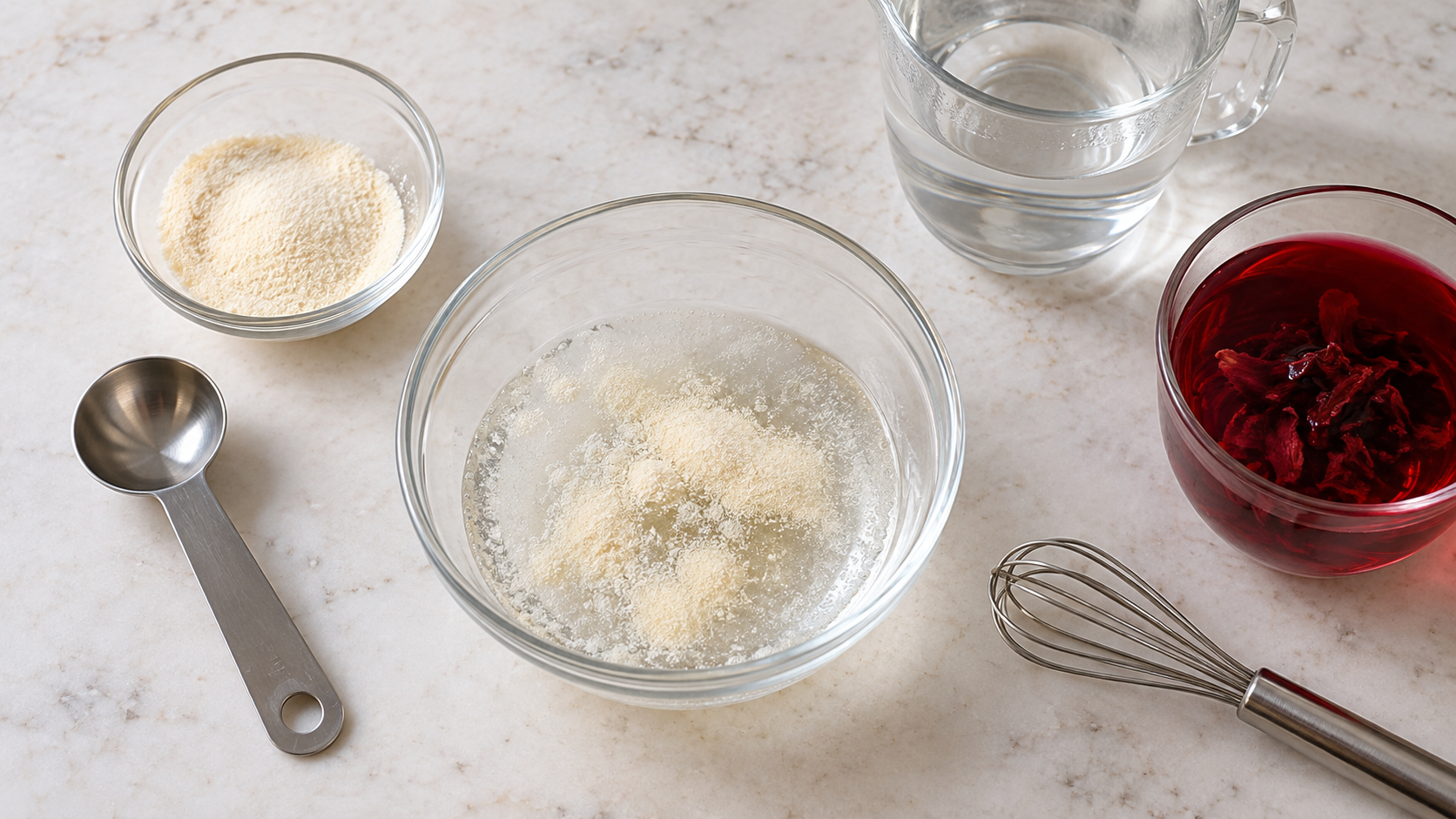
- Pour about 1/4 cup of cold water into a small glass bowl.
- Sprinkle the gelatin evenly over the surface and let it sit for about 5 minutes. This is called blooming the gelatin.
- Heat the remaining water until hot but not aggressively boiling.
- Pour the hot water over the bloomed gelatin and whisk until completely dissolved.
- Stir in the hibiscus or berry tea.
- Add lemon juice or your preferred calorie-free sweetener if desired.
- Drink while warm, or refrigerate for 1 to 2 hours until softly set.

How Many Calories and How Much Protein?
The exact nutrition depends on the gelatin brand and any flavorings you add. A tablespoon of plain gelatin typically contributes only a few dozen calories and roughly 5 to 6 grams of protein. Unsweetened tea and lemon add very little.
That makes the basic recipe much lighter than many pastries, cookies, sweetened coffee drinks, or packaged desserts. The calorie difference is one reason this recipe can be useful as a snack substitution.
Why Gelatin May Help With Appetite
Protein generally tends to be more filling than carbohydrate or fat, and gelatin is primarily protein. Research comparing different protein sources has found that gelatin can suppress appetite in the short term in some controlled settings.
For example, a study published in The Journal of Nutrition found greater appetite suppression with gelatin than casein during a short controlled trial. However, a later longer-term study did not find a special advantage for gelatin in weight maintenance.
This distinction matters. Feeling fuller after a gelatin snack does not prove that gelatin itself causes fat loss. It may simply make it easier for some people to eat less later.
Does Gelatin Burn Belly Fat?
No. There is no good evidence that gelatin specifically targets abdominal fat or speeds up fat burning.
Body fat decreases when overall energy intake stays below energy needs over time. A gelatin snack can fit into that strategy if it replaces something more calorie-dense, but adding gelatin on top of your usual food intake does not create a weight-loss effect by itself.
Claims that the “gelatin trick” activates a special fat-burning hormone or works like a weight-loss medication go far beyond the available evidence.
Is Gelatin a Complete Protein?
No. This is one of the most important details missing from many viral videos.
Gelatin is derived from collagen and contains amino acids such as glycine and proline, but it is not a nutritionally complete protein. A USDA technical review notes that gelatin contains no tryptophan and is deficient in several other essential amino acids.
That means gelatin should complement—not replace—complete protein foods such as eggs, Greek yogurt, dairy, fish, poultry, soy, or whey protein.
Quick Protein Kitchen High-Protein Upgrade
If you want a more filling snack, turn the basic recipe into a creamy high-protein version.
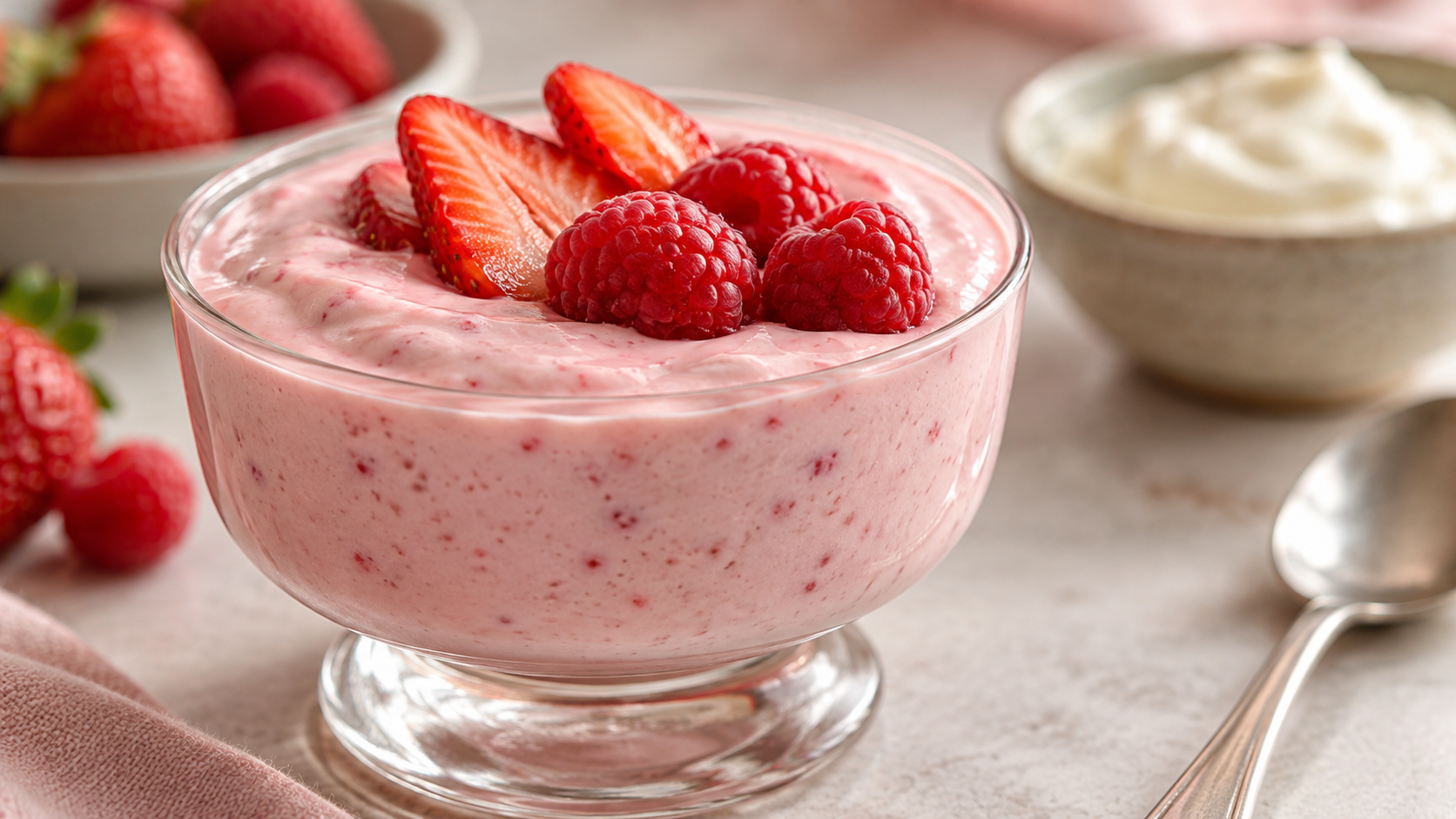
Prepare the gelatin mixture as above, then let it cool until it is warm rather than hot. Whisk in 1/2 cup plain Greek yogurt and refrigerate until set. Add a few raspberries or sliced strawberries before serving.
The result is creamy, pale pink, and very different from traditional transparent gelatin. Depending on the yogurt you use, this version can provide considerably more complete protein than gelatin alone.
If you like Greek-yogurt-based recipes, try our Blueberry Greek Yogurt Chia Protein Smoothie for a higher-protein breakfast or snack.
When Should You Eat the Gelatin Recipe?
Many viral versions suggest eating gelatin about 15 to 30 minutes before a meal. There is nothing magical about that timing. The goal is simply to use a small, light snack before you become extremely hungry.
Another practical approach is to use it during the part of the day when you usually reach for a high-calorie snack. If a homemade gelatin cup replaces a pastry, candy bar, or large sweetened drink, that substitution can reduce total calorie intake without requiring a complicated diet rule.
If you are comparing viral gelatin variations, our Korean gelatin recipe explains the 3-ingredient yuja version and the difference between gelatin, konjac jelly, and agar.
What About the Pink Gelatin Trick?
The pink version is simply a colorful variation of the same idea. You do not need a special supplement or proprietary powder.
Natural options for the pink color include hibiscus tea, raspberry tea, a small amount of strawberry puree, unsweetened cranberry juice, or pomegranate juice. For the lowest-calorie version, strongly brewed hibiscus tea works especially well.
Gelatin Weight Loss Recipe vs. Sugary Jell-O
They are not necessarily the same thing. Traditional flavored gelatin mixes may contain substantial added sugar, while unflavored gelatin lets you control the sweetness and ingredients yourself.
For a lighter recipe, use unflavored gelatin with unsweetened tea, citrus, berries, or a calorie-free sweetener. Always check the label if you are using a flavored packaged product.
Can the Gelatin Trick Actually Help You Lose Weight?
Potentially—but only as part of a larger eating pattern.
If a homemade gelatin snack has around 20 to 50 calories and replaces a 250- or 300-calorie afternoon treat, the calorie difference can be meaningful. If it also helps you arrive at dinner less hungry, that may make portion control easier.
But if you simply add gelatin to everything you already eat, there is no reason to expect automatic weight loss.
The strongest long-term strategy is still built around filling foods: lean protein, vegetables, fruit, legumes, whole grains, and appropriate portions of healthy fats. Gelatin can be one convenient tool inside that pattern.
Who Should Be Careful?
Gelatin is a common food ingredient and is generally well tolerated by many people. However, anyone following a medically prescribed low-protein diet, managing a condition that requires specific nutrition targets, or dealing with food allergies or intolerances should follow individualized medical advice.
Gelatin is animal-derived, so it is not suitable for vegetarian or vegan diets.
The Bottom Line
The viral gelatin weight loss recipe is not a miracle fat-loss method. It does not melt belly fat, replace weight-loss medication, or override overall calorie intake.
What it can be is a simple, inexpensive, relatively low-calorie snack that contains some protein and may help with short-term fullness. Used to replace a heavier snack or dessert, it can fit sensibly into a calorie-conscious diet.
For Quick Protein Kitchen, that is the useful takeaway: keep the recipe simple, make the claims realistic, and upgrade it with Greek yogurt when you want more complete protein. For a completely different citrus flavor, try our Korean gelatin recipe with yuja and ginger.
Frequently Asked Questions
What are the three ingredients in the gelatin weight loss recipe?
The simplest version uses unflavored gelatin, water, and a low-calorie flavoring such as unsweetened hibiscus or berry tea. Lemon juice or a calorie-free sweetener is optional.
Does gelatin really help you lose weight?
Gelatin does not directly cause weight loss. It may help some people feel fuller for a short time, and a low-calorie gelatin snack can support a calorie deficit when it replaces a more calorie-dense snack.
Does gelatin burn belly fat?
No. There is no reliable evidence that gelatin specifically burns abdominal fat. Fat loss depends on overall energy balance and your broader eating and activity pattern.
What is the pink gelatin trick?
The pink gelatin trick is simply a colored version of the recipe, often made with hibiscus tea, berries, cranberry juice, or pomegranate. The pink color itself has no special weight-loss effect.
When should I eat gelatin for weight loss?
Many people use it about 15 to 30 minutes before a meal or as a lighter afternoon snack. The timing is not magical; the practical goal is to manage hunger and replace a higher-calorie option.
Is gelatin a complete protein?
No. Gelatin is an incomplete protein because it lacks tryptophan and is low in several essential amino acids. It should complement, not replace, complete protein sources such as eggs, dairy, fish, poultry, soy, or whey.
Is gelatin the same as collagen powder?
Both come from collagen, but they behave differently. Gelatin forms a gel when cooled, while hydrolyzed collagen peptides usually dissolve without setting.
Can I make this gelatin recipe ahead of time?
Yes. Prepare it in individual covered portions and refrigerate. Follow the storage guidance for the ingredients you use and discard any serving that develops an unusual smell, appearance, or texture.
References
- Gelatin, appetite suppression, and energy expenditure — PubMed
- Gelatin and long-term weight maintenance — PubMed
This article is for general informational purposes and is not a substitute for individualized medical or nutrition advice.
1 thought on “Gelatin Weight Loss Recipe: Does the Viral Gelatin Trick Really Work?”