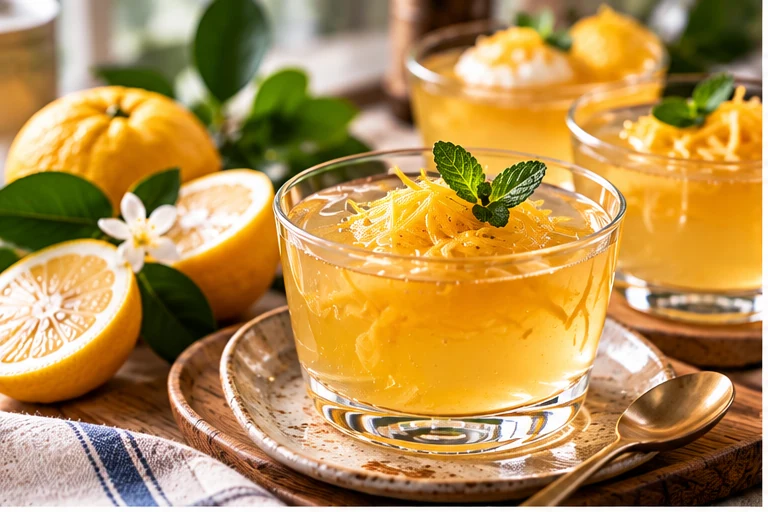
If you searched for a Korean gelatin recipe, you may be looking for the viral 3-ingredient jelly, Korean konjac jelly, or a Korean-inspired gelatin dessert. This version uses three core ingredients—unflavored gelatin, water, and yuja citron tea concentrate—with ginger as an optional flavor boost. These yuja ginger jelly cups are a Korean-inspired citrus dessert made with unflavored gelatin, water, yuja citron tea concentrate, and a little ginger. They take about 10 minutes of hands-on preparation, then chill until softly set. This is a modern home recipe inspired by Korean yuja flavors—not a claim that gelatin jelly cups are a traditional named Korean dish.
Quick answer: bloom 2 teaspoons of unflavored gelatin in cold water, dissolve it into a warm yuja-ginger mixture, divide into 4 small cups, and refrigerate for 3–4 hours. The result is a soft, citrusy Korean-inspired jelly.
What Is a Korean Gelatin Recipe?
Yuja is Korean citron, an aromatic citrus fruit commonly enjoyed in Korean yuja tea. In this recipe, prepared yuja tea concentrate adds sweet-tart citrus flavor to a delicate gelatin dessert. Traditional Korean jelly dishes include preparations made from starch and other setting agents; this particular recipe uses animal-derived gelatin and is best described as Korean-inspired.
3-Ingredient Korean Gelatin: The Simple Base
At its simplest, this Korean-inspired gelatin jelly needs only three core ingredients: unflavored gelatin, water, and yuja tea concentrate. The optional ginger adds warmth but is not required for the jelly to set. This distinction matters because online searches for “Korean gelatin” can also refer to konjac jelly products, which use a different gelling ingredient and should not be prepared with the same method.
Ingredients for 4 Small Jelly Cups
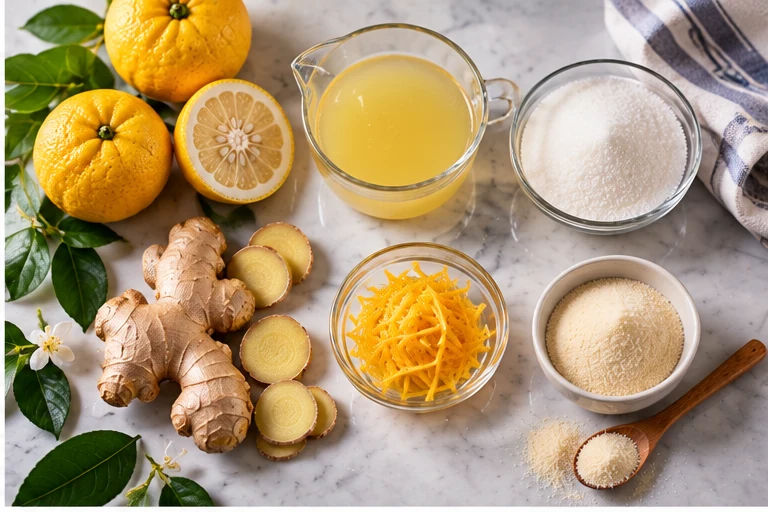
- 2 teaspoons (about 6 g) unflavored powdered gelatin: for a soft spoonable set.
- 1¾ cups (420 ml) water, divided: ¼ cup cold for blooming and 1½ cups warm for mixing.
- 3 tablespoons Korean yuja tea concentrate (yuja-cheong): use more or less to taste, depending on sweetness.
- ¼ teaspoon ground ginger: optional for a subtle warming note.
Yuja tea concentrate often already contains sugar or honey. Taste before adding any extra sweetener. If your concentrate contains citrus peel, strain it for a smooth jelly or leave a little peel for texture.
How to Make This Korean Gelatin Recipe
Step 1: Bloom the gelatin
Pour ¼ cup cold water into a small bowl. Sprinkle the gelatin evenly over the surface. Let it stand for 5 minutes until hydrated. Do not dump the powder into a single clump.
Step 2: Warm the citrus base
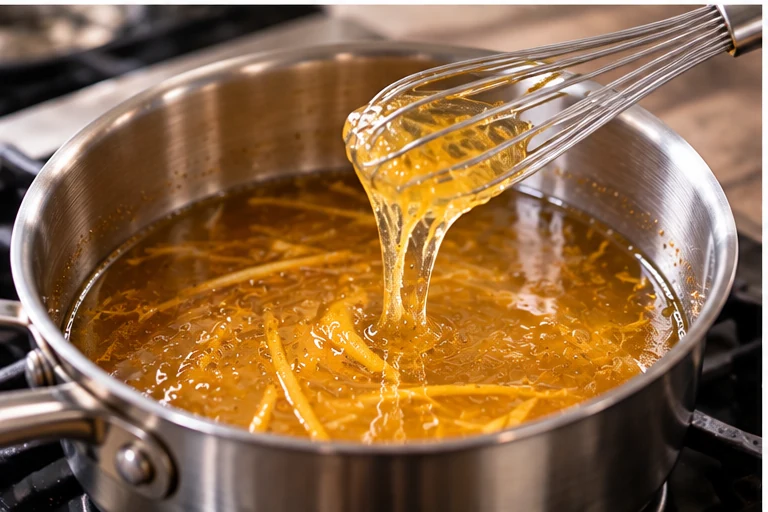
Heat the remaining 1½ cups water until steaming but not boiling. Whisk in the yuja tea concentrate and optional ground ginger until the concentrate dissolves.
Step 3: Dissolve the gelatin
Stir the bloomed gelatin into the warm yuja mixture until completely dissolved and no grains remain. Avoid boiling the gelatin mixture. Taste carefully after it cools slightly; add a little more yuja concentrate if needed.
Step 4: Pour and chill
Divide the mixture among four small cups or ramekins. Cool briefly, cover, and refrigerate for at least 3–4 hours, or until fully set. Serve cold with a tiny ribbon of citrus peel if desired.
Recipe Tips for a Smooth Set
- Bloom in cold water first: this prevents dry gelatin lumps.
- Use gentle heat: warm liquid dissolves gelatin; aggressive boiling is unnecessary.
- Check your yuja concentrate: brands vary in sweetness and peel content.
- Adjust the texture: for firmer cubes rather than soft cups, use about 2½ teaspoons gelatin for the same amount of liquid.
- Chill fully: the jelly needs refrigerator time even though the preparation is quick.
Korean Gelatin vs Konjac Jelly vs Agar: What’s the Difference?
No. Gelatin is an animal-derived protein that sets when chilled. Agar is derived from seaweed and sets differently, while konjac products use konjac-derived ingredients and often require specific formulations. These are not direct one-for-one substitutions. For a vegetarian jelly, follow a recipe formulated specifically for agar rather than swapping it into this recipe without changing the method.
Gelatin
Animal-derived gelatin must first bloom in cool liquid, then dissolve in warm liquid and chill to set. It creates the soft, springy texture used in this recipe.
Konjac jelly
Konjac jelly is made from konjac-derived glucomannan or a formulated konjac gelling mix. It is not the same ingredient as gelatin and should not be swapped gram-for-gram into this recipe. If you specifically want Korean konjac jelly, use a product or recipe formulated for konjac.
Agar jelly
Agar is plant-based and derived from seaweed. It generally needs boiling to activate and produces a firmer, more brittle set than gelatin. Use a tested agar ratio rather than treating it as a direct gelatin substitute.
Easy Flavor Variations
Yuja lemon jelly
Replace 1 tablespoon of the yuja concentrate with freshly squeezed lemon juice, then taste and adjust sweetness before chilling.
Yuja green tea jelly
Replace ½ cup of the warm water with brewed green tea. Allow the tea to cool slightly before combining with the bloomed gelatin.
Ginger citrus jelly cubes
Use a little more gelatin for a firmer texture and set the mixture in a shallow container. Cut into small cubes once fully chilled.
How to Serve Yuja Jelly
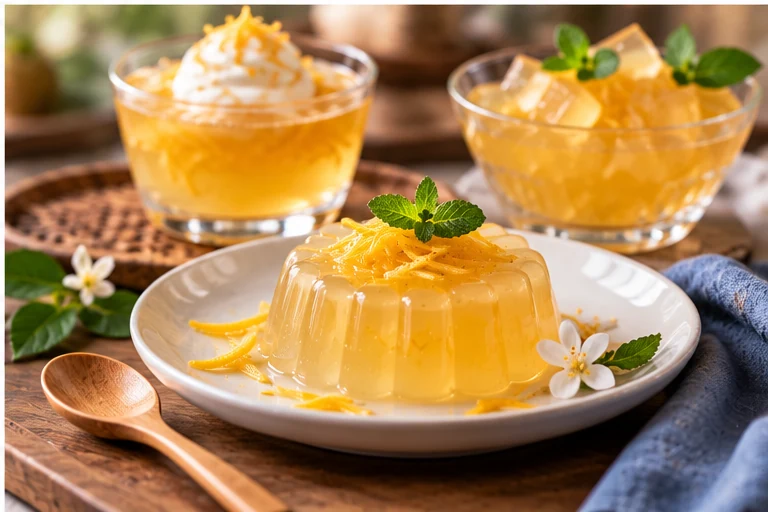
Serve these cups as a refreshing small dessert after a meal, or alongside a protein-rich breakfast such as Greek yogurt. The gelatin contributes some protein, but these small jelly cups should not be described as a high-protein meal. For another gelatin-based recipe, explore our easy lemon gelatin drink. For a more substantial snack, pair jelly with our cottage cheese berry protein bowl.
Storage and Food Safety
Keep the finished jelly covered in the refrigerator and enjoy within 3–4 days for best quality. Do not leave dairy-free gelatin desserts at room temperature for extended periods. Freezing can change the texture, so refrigeration is preferable.
Nutrition Note
Nutrition varies with the yuja concentrate brand. The gelatin in the entire batch supplies roughly 5–6 grams of protein; divided into four cups, that is only around 1–1½ grams per serving. Most calories and added sugars, if present, come from the sweetened yuja concentrate. These cups are a flavored dessert, not a weight-loss treatment or a replacement for a balanced meal.
Frequently Asked Questions
Is this an authentic traditional Korean gelatin dessert?
No. It is a Korean-inspired jelly using yuja tea concentrate. Korea has distinct traditional jelly preparations, but this recipe is a modern gelatin adaptation.
What is yuja tea concentrate?
It is a sweet citrus preserve commonly mixed with hot water to make Korean yuja tea. Look for it in Korean grocery stores or Asian food markets.
Can I use regular lemon instead of yuja?
Yes, but the flavor will be different. Use a lemon-based jelly recipe with enough sweetness to balance the acidity.
Can I use agar instead of gelatin?
Not as a direct substitution. Agar requires a different amount and heating process. Use a tested agar recipe.
Does Korean gelatin help with weight loss?
There is no good evidence that this dessert causes weight loss. For the broader viral trend, see our gelatin weight loss recipe guide, which explains what gelatin can and cannot realistically do. Enjoy it as a portioned treat rather than a fat-burning remedy.
How long does the jelly take to set?
Plan on 3–4 hours in the refrigerator, though timing varies with cup size and refrigerator temperature.
Is Korean gelatin vegan?
No. Unflavored gelatin is animal-derived. Vegan jellies can be made with agar using a different method.
Can I make the cups ahead of time?
Yes. Prepare them the night before, keep covered and refrigerated, and serve cold.
Bottom Line
This Korean gelatin recipe makes refreshing yuja ginger jelly cups with a soft, spoonable texture. It is a simple Korean-inspired dessert that highlights fragrant citron, with no exaggerated health claims. For more quick snack inspiration, see our cottage cheese protein snack.
1 thought on “Korean Gelatin Recipe: 3-Ingredient Yuja Jelly + Konjac Guide”