
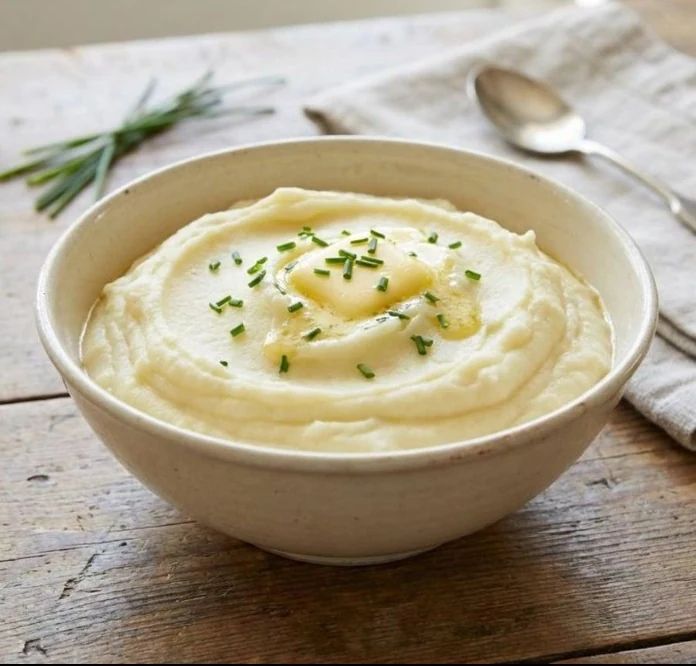
These cottage cheese mashed potatoes are creamy, comforting and easy to make with a protein-rich twist. Blended cottage cheese gives traditional mashed potatoes a silky finish and adds protein without requiring heavy cream. Serve them alongside roast chicken, turkey or your favorite holiday main dish.
Why You’ll Love These High-Protein Mashed Potatoes
Looking for another easy cottage cheese recipe? Try our lemon blueberry cottage cheese pancake bites for a make-ahead breakfast, or this 5-minute cottage cheese ranch dip for a savory snack.
- Extra protein: cottage cheese adds protein compared with potatoes mashed using only butter and milk.
- Comfort-food flavor: buttery potatoes, garlic and chives make this an easy crowd-pleasing side.
- Simple ingredients: everything is available at most grocery stores.
- Holiday-friendly: a useful side for Thanksgiving or everyday dinners.
Ingredients
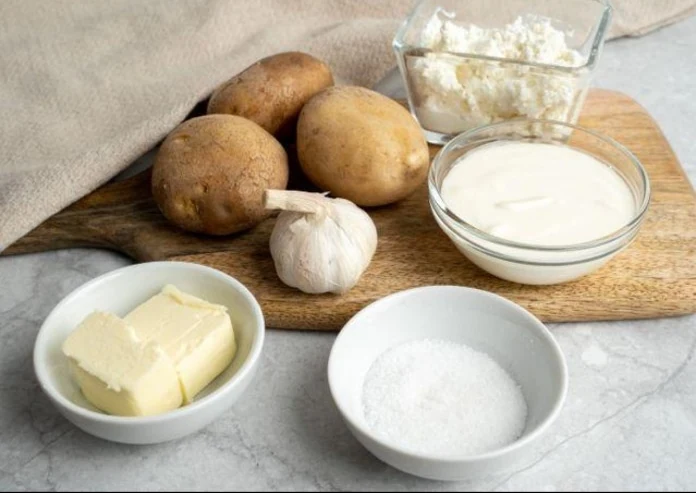
Makes about 6 side-dish servings.
- 2 pounds (900 g) Yukon Gold potatoes, peeled if desired and cut into evenly sized chunks
- 1 cup (225 g) plain cottage cheese (2% or 4% milkfat)
- 2 tablespoons (28 g) unsalted butter
- 1/4 cup (60 ml) warm milk, plus more as needed
- 1 small garlic clove, finely grated, or 1/4 teaspoon garlic powder
- 1/2 teaspoon fine salt, plus more for cooking water and to taste
- 1/4 teaspoon freshly ground black pepper
- 2 tablespoons finely chopped fresh chives or parsley, optional
Choosing potatoes: Yukon Gold potatoes have a naturally creamy texture and work especially well here. Russet potatoes also work but tend to produce a fluffier result. Cottage cheese brands vary in salt content and moisture, so season at the end and add the milk gradually.
How to Make Cottage Cheese Mashed Potatoes
- Cook the potatoes: Place the potato chunks in a large pot and cover with cold water by about 1 inch. Salt the water lightly. Bring to a boil, then simmer for approximately 15–20 minutes, until a fork slides easily through the centers.
- Blend the cottage cheese: While the potatoes cook, blend cottage cheese until smooth. Add the garlic and a tablespoon of the warm milk if needed to help it blend. Set aside.
- Drain and dry: Drain the potatoes thoroughly. Return them to the warm pot over very low heat for 30–60 seconds, stirring gently to evaporate excess water. Turn off the heat.
- Mash: Mash the potatoes with a potato masher or pass them through a ricer. Add the butter and stir until melted.
- Fold in the cottage cheese: Add the blended cottage cheese, remaining warm milk, salt and pepper. Fold gently just until combined, adding more milk one tablespoon at a time if needed.
- Finish: Taste and adjust seasoning. Garnish with chives or parsley and serve warm.

The Secret to Creamy Mashed Potatoes Without Gluey Texture
Blend the cottage cheese, not the cooked potatoes. A blender or food processor can overwork potato starch, turning the mash sticky or gluey. For fluffy potatoes, use a ricer or hand masher and fold the dairy mixture in gently. Also drain the potatoes well: extra water can dilute the flavor and make the mash runny.
Use warm milk rather than cold milk so the potatoes stay pleasantly warm while you mix. If the cottage cheese is very thick, blend it with a small splash of milk before adding it to the potatoes. For a slightly richer version, use 4% cottage cheese.
Easy Variations
- Roasted garlic: stir in a few cloves of soft roasted garlic instead of raw garlic.
- Herb mashed potatoes: add chopped parsley, dill or chives just before serving.
- Cheesy: fold in a small amount of finely grated Parmesan and reduce the added salt accordingly.
- Greek yogurt finish: add a spoonful of plain Greek yogurt for a tangier flavor, adjusting the milk to maintain a creamy texture.
What to Serve With Cottage Cheese Mashed Potatoes
These potatoes pair naturally with roast turkey, baked chicken, lean meatballs or mushroom gravy. For Thanksgiving, serve them with roasted green beans, Brussels sprouts and cranberry sauce. On a weeknight, try them alongside grilled chicken and a big green salad.
Make-Ahead, Storage and Reheating
Make ahead: Prepare the mashed potatoes up to one day in advance, cool promptly and refrigerate in a covered container. Refrigerator: Store leftovers in an airtight container for up to 3–4 days. Do not leave cooked potatoes at room temperature for more than two hours.
Reheat: Warm gently in a covered saucepan over low heat or in the microwave, stirring periodically. Add a splash of milk to loosen the texture if needed, and heat thoroughly before serving. Cottage cheese can separate when overheated, so use gentle heat. Freezing is possible, but the texture may become grainier after thawing; refrigeration is preferable for the best creamy result.
Nutrition Note: How Much Protein?
Potatoes provide carbohydrates and potassium, while cottage cheese contributes additional protein. The precise protein content per serving depends on your potato variety, cottage cheese brand, milk and portion size. Because this recipe has not been laboratory-tested or calculated from a specific set of product labels, no exact protein or calorie amount is claimed here. For accurate tracking, calculate the final recipe using your ingredient labels and divide by six portions.
Frequently Asked Questions
Can you taste the cottage cheese in mashed potatoes?
The flavor is mild once blended and combined with potatoes, butter and seasonings. Some brands taste tangier than others, so start with a plain cottage cheese you enjoy.
Should I blend cottage cheese before adding it?
Yes, if you want a smooth texture. Blend only the cottage cheese; mashing the potatoes separately helps prevent a gummy consistency.
Can I make this recipe without butter?
Yes. Omit the butter and use a little extra warm milk if necessary. The potatoes will taste less rich but still creamy.
Can I use low-fat cottage cheese?
Yes. Both 2% and 4% cottage cheese work. Lower-fat varieties may be less rich and vary in moisture.
What are the best potatoes for this recipe?
Yukon Golds are ideal for a creamy mash. Russets make a fluffier version. Avoid overmixing either type.
Can I make cottage cheese mashed potatoes ahead for Thanksgiving?
Yes. Make them the day before, refrigerate promptly, and reheat gently with a splash of milk just before serving.
Are cottage cheese mashed potatoes gluten-free?
The basic ingredients are naturally gluten-free, but check labels on packaged cottage cheese, seasonings and any toppings if gluten avoidance is medically necessary.
Can I use a food processor to mash the potatoes?
It’s not recommended. The blades can overwork the starch and make potatoes gluey. Use a masher or ricer instead.
The Bottom Line
High-protein cottage cheese mashed potatoes are a practical twist on a classic side dish. Smooth blended cottage cheese adds creaminess and protein, while a gentle hand with the potatoes keeps the texture light. Make them for a simple chicken dinner or add them to your Thanksgiving menu.
2 thoughts on “High-Protein Cottage Cheese Mashed Potatoes (Creamy & Easy)”