Shrimp nigiri is a simple way to enjoy classic sushi flavors at home without handling raw seafood. Also called ebi nigiri, each piece combines tender, fully cooked shrimp with a small hand-shaped mound of lightly seasoned sushi rice. The result is attractive, naturally portioned, and easier to make than most sushi rolls.
Quick answer: Cook and season 1 cup of uncooked sushi rice, then poach 16 large shrimp until the flesh is firm, pearly, and opaque. Peel and butterfly the shrimp, shape the warm-to-cool seasoned rice into small ovals, and press one shrimp over each rice mound. Serve promptly with soy sauce, pickled ginger, and optional wasabi.
Printable Shrimp Nigiri Sushi Recipe

Shrimp Nigiri (Ebi Nigiri)
Ingredients
Method
- Rinse 1 cup short-grain rice until the water is mostly clear. Cook with the recommended amount of water, typically about 1¼ cups, for 15 minutes covered or as directed by the package. Rest covered 10 minutes.
- Mix rice vinegar, sugar, and salt; fold gently into hot cooked rice. Cool until comfortable to handle without leaving at room temperature for an extended period.
- For straighter shrimp, insert bamboo skewers lengthwise before cooking. Simmer shrimp in water until fully cooked, firm, pearly and opaque, usually about 2–4 minutes depending on size. Remove every skewer.
- Peel and devein if necessary, then slice along the underside of each cooked shrimp without cutting all the way through. Open gently like a book and pat dry.
- With clean, slightly damp hands, shape around 2 tablespoons of seasoned rice into a small loose oval. Repeat for 16 pieces.
- Place one butterflied cooked shrimp over each rice oval and press gently to attach. Add thin nori strips if you like.
- Offer with soy sauce or tamari, pickled ginger, and optional wasabi. Keep cooked shrimp cold until assembling and refrigerate leftovers promptly.
Notes
What Is Shrimp Nigiri?
Nigiri sushi is a Japanese-style hand-formed piece of seasoned rice topped with seafood or another topping. For shrimp nigiri, or ebi nigiri, the shrimp is traditionally cooked and butterflied to sit neatly over the rice. Unlike a maki roll, it generally does not require a seaweed wrapper, bamboo rolling mat, or complicated equipment.
The rice matters just as much as the seafood: it should be seasoned with rice vinegar, lightly sweetened, and sticky enough to hold its shape without being squeezed into a hard lump. The shrimp should be cooked through but not rubbery.
Why Make Shrimp Nigiri at Home?
- Beginner-friendly: You can make individual pieces with clean, slightly damp hands and no sushi rolling mat.
- Cooked seafood: The recipe uses fully cooked shrimp rather than raw shrimp or sashimi.
- Easy to portion: Make 16 pieces for 4 small servings, or build a larger lunch with vegetables, edamame, and another protein-rich side.
- Fresh flavor: A little vinegar-seasoned rice, sweet shrimp, soy sauce, and optional wasabi go a long way.
- Make it your own: Add a thin nori band or sesame sprinkle once you are comfortable with the basic shape.
Ingredients for 16 Shrimp Nigiri
For the Sushi Rice
- 1 cup uncooked Japanese short-grain sushi rice, rinsed until the water runs mostly clear
- 1¼ cups water, or the amount recommended on your rice package
- 2 tablespoons unseasoned rice vinegar
- 2 teaspoons sugar
- ½ teaspoon fine salt
For the Shrimp and Serving
- 16 large raw shrimp, peeled after cooking for an elegant butterflied presentation
- Water for poaching, enough to cover the shrimp
- Soy sauce or reduced-sodium tamari, for serving
- Pickled ginger and a little wasabi, optional
- Optional narrow nori strips, for wrapping around individual pieces
Equipment: A saucepan or rice cooker, small pot, fine-mesh strainer, rice paddle or wooden spoon, sharp knife, and a plate. Straight bamboo skewers can help keep the shrimp from curling while they cook; they are optional and must be removed before serving.

How to Make Shrimp Nigiri Step by Step
1. Rinse and Cook the Sushi Rice
Place the sushi rice in a bowl, cover with cool water, swish, and drain. Repeat until the water is mostly clear. Transfer to a saucepan with 1¼ cups water, or follow the exact rice-to-water ratio on your package. Bring to a simmer, cover, reduce heat to low, and cook about 15 minutes or according to package directions. Turn off the heat and let stand covered for 10 minutes. Avoid lifting the lid repeatedly while cooking.
2. Season the Rice
Stir rice vinegar, sugar, and salt together until dissolved. Transfer the cooked rice to a wide bowl and gently fold the seasoning through with a rice paddle, using a slicing-and-lifting motion rather than mashing. Let the rice cool until it is comfortable to handle, keeping it covered with a clean, slightly damp cloth during assembly. Do not leave cooked rice sitting at room temperature for an extended time.
3. Cook the Shrimp Thoroughly
For straight shrimp, insert a thin skewer lengthwise through each raw shrimp before cooking, taking care not to poke your hands. Bring a pot of water to a gentle simmer. Cook the shrimp in batches, usually for about 2–4 minutes depending on their size, until fully cooked: the flesh should be firm, pearly, and opaque. Avoid judging by the timer alone. Transfer promptly to a clean plate and cool just enough to handle. Remove every skewer.
The U.S. Food and Drug Administration’s seafood safety guidance recommends cooking seafood thoroughly and looking for a firm, pearly, opaque appearance in cooked shrimp. Always avoid cross-contamination between raw shrimp and ready-to-eat rice.
4. Peel, Devein, and Butterfly
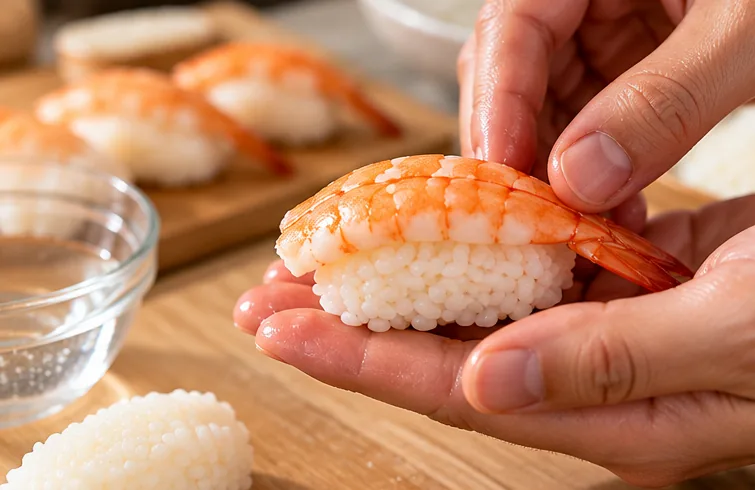
Remove shells and heads if present, keeping or removing the tail to suit your preferred presentation. If you see a dark digestive tract, remove it. With a sharp knife, make a shallow slit along the underside (belly) of each shrimp, without cutting all the way through. Open it gently like a book and pat lightly dry. This creates the flattened topping associated with ebi nigiri.
5. Shape the Nigiri Rice
Lightly wet your fingers with clean water to reduce sticking. Scoop up roughly 2 tablespoons of seasoned rice and use your fingers to press it into a small, rounded oval. Aim for a light, cohesive shape, not a tightly compacted block. Repeat to make 16 pieces, adjusting the rice portion to match the shrimp size.
6. Add Shrimp and Serve
Lay one butterflied shrimp across the top of each rice oval, with the opened side touching the rice. Press very gently so the topping sits securely. Add a slim strip of nori around the middle only if desired. Arrange on a platter and serve immediately with soy sauce, pickled ginger, and optional wasabi.

Expert Tips for Better Ebi Nigiri
- Use genuine sushi rice: Japanese short-grain rice gives the soft, slightly sticky texture needed for shaping.
- Do not overcook shrimp: Shrimp can quickly become tough when left in simmering water too long.
- Butterfly from the belly: Keep the top of the cooked shrimp intact for a neat, flat presentation.
- Keep fingers damp, not wet: Too much water can make the rice slippery and dilute the seasoning.
- Work in small batches: Keep the shrimp properly chilled until you are ready to assemble and serve.
- Balance the portions: The shrimp should cover the rice almost edge to edge, with a little rice visible underneath.
Easy Variations
Spicy Shrimp Nigiri
Mix a teaspoon of plain Greek yogurt or mayonnaise with a little sriracha. Add a tiny dot to the shrimp just before serving. Keep the sauce refrigerated until needed and avoid drowning the subtle shrimp flavor.
Sesame Shrimp Nigiri
Sprinkle a few toasted sesame seeds over the finished shrimp. The nutty aroma is especially good alongside reduced-sodium soy sauce.
Nori-Wrapped Ebi Nigiri
Cut nori into narrow strips and wrap one strip around each assembled piece. Lightly moisten the end of the nori so it sticks. This is particularly helpful for beginners if the topping slides off.
Higher-Protein Lunch Plate
Shrimp provides protein, but each piece also contains rice. To make a more substantial protein-focused lunch, serve four to six nigiri with steamed edamame, crunchy cucumber salad, or another protein-rich side rather than assuming the nigiri alone makes a very high-protein meal.
What to Serve With Shrimp Nigiri
Keep the accompaniments simple: soy sauce, pickled ginger, cucumber salad, and steamed edamame all work well. For other shrimp-based lunches on Quick Protein Kitchen, explore our lemon pepper shrimp and cauliflower rice bowl or garlic lemon shrimp and zucchini skillet. These dishes offer different ways to build a satisfying meal around cooked shrimp.
Storage, Food Safety, and Leftovers
Freshly assembled shrimp nigiri is best enjoyed right away. Keep cooked shrimp refrigerated until you are ready to assemble, and use clean hands and utensils. If you make components ahead, promptly chill them in shallow containers and keep them at 40°F (4°C) or below. Refrigerate perishable food within two hours, or one hour in temperatures above 90°F (32°C). Never leave cooked rice out for hours; promptly chill unused rice.
Preassembled nigiri can become hard as refrigerated rice loses its ideal texture, so it is better to cook and chill the shrimp separately and assemble close to serving time. Cooked sushi rice must be handled carefully and refrigerated promptly if it is not being served soon. Shrimp is a major shellfish allergen; do not serve this dish to someone with a shrimp or shellfish allergy.
Nutrition Notes
The protein, calories, and sodium depend on the shrimp size, the amount of rice in each piece, and the serving sauces. Shrimp contributes lean protein, while sushi rice adds carbohydrates. The vinegar, sugar, and sauce change the final nutrition; reduced-sodium soy sauce may help lower sodium. Without precise ingredient weights or a verified recipe calculation, it would be misleading to give an exact protein or calorie number for every homemade piece.
Frequently Asked Questions
Is the shrimp in shrimp nigiri raw or cooked?
In the classic ebi nigiri style featured here, shrimp is fully cooked, then peeled and butterflied before being placed on seasoned rice.
What is shrimp nigiri called in Japanese?
It is commonly called ebi nigiri. “Ebi” refers to shrimp and “nigiri” describes the hand-pressed sushi rice presentation.
Can I use precooked shrimp for nigiri?
Yes. Use good-quality fully cooked shrimp, thaw it safely in the refrigerator if frozen, pat dry, and butterfly if needed. Poaching raw shrimp with a skewer can give a straighter, flatter shape, but precooked shrimp is a convenient alternative.
What type of rice is best for shrimp nigiri?
Japanese short-grain sushi rice works best. Long-grain rice usually does not hold the same compact but tender nigiri shape.
How do I keep shrimp from curling?
Carefully insert a straight bamboo skewer through the shrimp lengthwise before poaching, then remove it once the shrimp is cooked. Butterflying the cooked shrimp helps it lay flat against the rice.
Do I need wasabi or nori?
No. Wasabi and nori are optional. The essential elements are cooked shrimp and properly seasoned sushi rice.
Is shrimp nigiri high in protein?
Shrimp supplies protein, but the exact amount per piece varies with size and rice portions. Add edamame or another protein-rich side if you want a higher-protein meal.
Can shrimp nigiri be made ahead?
Cooked shrimp and rice can be prepared ahead when handled and chilled safely, but for better taste and texture, assemble the pieces close to serving. Do not leave cooked rice or shrimp at room temperature for a prolonged time.
Does shrimp nigiri contain gluten?
The rice and plain shrimp generally do not contain gluten, but regular soy sauce may contain wheat. Choose a labeled gluten-free tamari or sauce, and check packaged ingredients for cross-contact.
Bottom Line
Homemade shrimp nigiri sushi is achievable with a pot of seasoned short-grain rice, fully cooked shrimp, and a few simple shaping steps. The key is to cook the shrimp carefully, butterfly it neatly, and press the rice gently enough to stay tender. Serve fresh, add your favorite condiments, and enjoy a restaurant-inspired ebi nigiri lunch made in your own kitchen.